
Why Professional Certifications Still Matter in 2026

The way people build their careers is changing. A university degree can provide a strong foundation, but many professionals now continue learning throughout their careers to keep up with changing technologies, business practices, and industry requirements. From artificial intelligence and cybersecurity to project management and IT service management, employers increasingly need people who can demonstrate relevant and up-to-date knowledge.
This is where professional certifications can become an important part of career development. A certification does not replace practical experience, but it can provide structured learning and demonstrate knowledge in a particular area. For professionals looking to strengthen their existing skills, move into a new role, or take on greater responsibilities, choosing the right certification can be a useful step in a longer-term professional development plan.
What Is the Value of Professional Certification?
Professional certifications provide a structured way to learn about a particular discipline, framework, technology, or professional practice. Instead of learning through disconnected resources, learners can follow a defined curriculum and, depending on the programme, prepare for an examination or certification assessment.
This can be particularly useful for professionals working in technology and business environments, where skills and tools can change quickly. CourseMonster, for example, provides training across areas including IT, artificial intelligence, project management, IT service management, IBM, ISO, Microsoft and other technology and professional training categories.
For someone already working in an industry, certification can also provide a structured way to fill knowledge gaps. A project professional may want to strengthen their understanding of a recognised project management framework. An IT professional may want to develop their knowledge of service management. A manager working with AI projects may want to understand AI governance and management systems.
The important point is to connect the certification to an actual career or business objective.
Certifications Can Support Career Development
Career development rarely happens through one qualification alone. Experience, technical ability, communication, problem-solving and industry knowledge all contribute to professional growth. However, additional training can help professionals demonstrate that they are actively developing their capabilities.
For example, someone working in project delivery may explore PRINCE2 training to develop knowledge of a structured project management methodology. CourseMonster currently offers PRINCE2 training options including Foundation, Practitioner and combined pathways.
A certification can also be useful when a professional is preparing for a change in responsibilities. Someone who has worked on projects but has not formally studied project management may use structured training to develop a stronger understanding of project principles, terminology and processes.
The same approach applies across technology and business disciplines. Rather than collecting qualifications simply to make a CV longer, professionals can choose training based on the skills they need for the next stage of their career.
Keeping Up With Artificial Intelligence
Artificial intelligence is one of the clearest examples of why continuous professional development matters. AI is no longer limited to specialist technology teams. It is increasingly relevant to managers, consultants, business teams, project professionals and organisations making decisions about how AI should be introduced and managed.
This means there is growing value in understanding not only how AI technologies work, but also how organisations can manage AI responsibly.
CourseMonster offers AI-focused training, including the PECB Certified Artificial Intelligence Professional programme, which covers areas such as AI foundations, machine learning, deep learning, natural language processing, computer vision, AI strategy, governance and risk management.
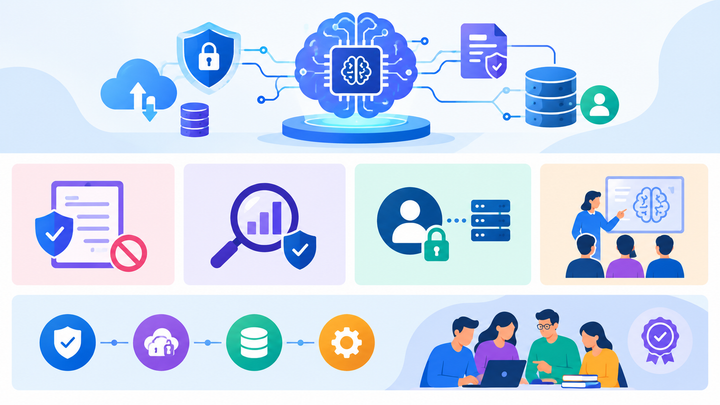
Professionals interested specifically in AI governance can also explore ISO/IEC 42001 training. The ISO/IEC 42001 Foundation course focuses on the fundamentals of an Artificial Intelligence Management System and introduces concepts including AI management, risk management, performance evaluation and continual improvement.
For professionals involved in implementing AI strategies, CourseMonster also provides ISO/IEC 42001 Lead Implementer training designed around the implementation of an AI management system.
These types of programmes illustrate an important change in professional learning: AI skills are becoming relevant not only to developers, but also to professionals involved in management, governance, compliance, consulting and business strategy.
IT Service Management Skills Remain Important
Technology does not create value simply because an organisation has new software or infrastructure. Businesses also need processes for delivering, managing and improving technology services.
This is where IT service management training can be relevant.
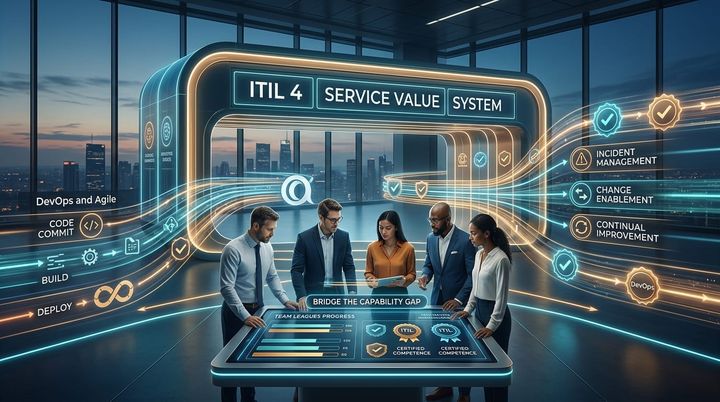
ITIL training, for example, focuses on service management concepts and practices that can be applied by professionals working across IT and business environments. CourseMonster offers ITIL training for roles including IT managers, support team leaders, service owners, project managers, service desk professionals, change managers, operations managers and IT consultants.
Professionals can explore the ITIL training courses available through CourseMonster to compare different learning options and identify a programme that fits their current role and career objectives.
The value of this type of training is not limited to learning terminology. Understanding service management principles can help professionals communicate more effectively with technical and business teams and understand how technology services are delivered and improved within an organisation.
Project Management Continues to Be a Valuable Skill
Almost every organisation works on projects. These can involve technology implementations, business transformation, product development, infrastructure changes, marketing initiatives or organisational improvements.
As projects become more complex, professionals need to understand how to plan, manage risks, coordinate stakeholders and monitor delivery.
PRINCE2 is one recognised project management approach available through CourseMonster. Its Practitioner-level training focuses on applying and tailoring the PRINCE2 method within project scenarios, while Foundation-level training introduces the core concepts and terminology.
Professionals interested in developing project management knowledge can explore CourseMonster's PRINCE2 training and compare available Foundation, Practitioner and Agile options.
The best choice will depend on a person's existing experience, responsibilities and professional goals.
Certification and Practical Experience Should Work Together
One of the most important things to remember is that certification and practical experience are not competing alternatives.
Experience shows what someone can do in a real working environment. Training and certification can provide structured knowledge and demonstrate that a professional has studied a particular subject or framework.
For example, someone managing projects every day may already have substantial practical experience but want formal training to strengthen their understanding of a recognised methodology. Another professional may have completed certification but still need workplace experience to become confident applying those concepts.
Combining both can create a more complete professional development path.
How Should You Choose a Professional Certification?
The number of certifications available today can make choosing one difficult. The best starting point is not necessarily the most popular certification. Instead, professionals should begin with their career objective.
Consider the role you want to move into and look at the skills commonly required for that position. If you want to progress in project management, project-focused training may make sense. If you work in IT operations, service management training could be relevant. If your role increasingly involves AI, you may want to explore AI, AI governance or AI management training.
It is also important to check the certification body, course syllabus, prerequisites, assessment requirements and delivery format before enrolling.
CourseMonster provides a broad range of professional and technical training options, allowing learners to explore different vendors and subject areas in one place. Its catalogue includes ITIL, PRINCE2, IBM, AI, ISO, Microsoft, Agile and other professional training categories.
You can explore all CourseMonster training categories to compare available options.
Learning Does Not Stop After Certification
Completing a certification should not be considered the end of professional development. Industries continue to evolve, technologies change and organisations adopt new approaches to working.
For professionals, this means learning can become an ongoing part of career planning.
A person might begin with a foundation-level certification, gain practical experience, and then progress to a more advanced qualification. Another professional might use training to move from one discipline into another, such as moving from general IT support toward service management, project management or cybersecurity.
The goal should be meaningful professional development rather than collecting certificates without a clear purpose.
Build a Learning Path Around Your Career Goals
Professional certifications can provide structure, credibility and a clear learning path, but their usefulness depends on how they fit into an individual's wider career plans.
Before choosing a course, consider where you are now, where you want to go, and which skills could help bridge that gap. Look for training that is relevant to your industry, aligned with your responsibilities and recognised by the organisations or professional communities that matter in your field.
Whether you are developing project management skills, strengthening IT service management knowledge, exploring artificial intelligence or building expertise in another technical discipline, structured professional training can be part of a long-term approach to career development.
Explore professional training and certification courses at CourseMonster and find a learning path that aligns with your professional goals.
Comments ()